Production Update #14

27 August 2026

I am pleased to announce that the novelization of the film script is complete. It has been exhaustively edited and uploaded to Amazon KDP. There will be a slight delay before the novel is available for purchase, as I accidentally omitted the production website information at the end. I’ll post an update when the eBook is available.

I also intend to make the book available in print – as both a paperback and hardcover. That will take slightly longer, but they should both be available to purchase by the end of the September.

The novel was edited far more than the film script was, so I’m going to go back and edit the film script to sync it up with all of the revisions made in the novel before we proceed to producing the film.

To celebrate the release of the book, the website is currently undergoing an overhaul. Please bear with me while I get everything cleaned-up and updated.

Advice for Actors

6 August 2026

I am continuing my short break from novelizing “Socks” today to spend a little time sharing my perspectives and advice on the art of acting.

I am no stranger to bad acting. The two genres I spend the most time watching – horror and porn – are two genres that are notorious for bad acting. All my life, I was baffled at how anyone could be such a terrible actor. It didn’t seem to me that acting was that difficult.

For a time, I thought maybe the reason acting came so naturally to me was because I had to act everyday in my life. I am a [generally non-violent] psychopath. Among other things, I do not experience ordinary emotional reactions. To survive professionally as an attorney, I had to learn to feign empathy and other human emotions. And although I don’t really think I was fooling any of my clients, I suspected that this effort was why acting came naturally to me.

It wasn’t until I started working with and training other actors that I realized that acting truly is a fairly simple skill.

Now – before everyone marches off into the comments to tell me how hard acting really is, please let me clarify. There are some truly talented actors out there. Patrick Stewart, Meryl Streep, Gary Oldman, Louise Fletcher, Anthony Hopkins, Patti Lupone, Morgan Freeman, just to name a few. When I say that “acting is easy”, I do not intend to undermine the legitimate talent of these actors. But there’s the shit actors you see in horror and porn on one end of the spectrum, there’s these iconic actors on the other end of the spectrum. In between those two extremes is “good, decent, passable acting”. And what I’m arguing is that the path from bad to passable is short indeed.

The problem is with how we teach acting. Or – at least – how some people teach acting.

I’ve worked with a lot of theatre directors who insist on the importance of their cast memorizing lines and cues. I think this is a terrible approach. First of all, actors are human beings. Human beings make mistakes. Few people can deliver a flawlessly recited performance night after night after night. Under the best of circumstances, there are going to be minor mistakes. And those mistakes ripple out into show-stopping blunders if the rest of the cast is so focused on their lines and cues that they are unable to adapt.

A better approach to learning a script is to learn the story. I believe that every director (or writer or whoever wants to be in charge of this particular exercise) should sit the cast down before the first read-through and tell them what the story is about (themes, lessons, conflicts, dilemmas, values, character arcs, etc.) and the large plot beats that structure the story. In other words – tell the damn story. Orally and condensed. If each actor was paying attention, each and every one of them should be able to hop up on stage and retell the story in their own words. Then all of the actors should be able to hop up on stage, as their characters, and roughly perform the story – all without ever having read the script. This develops comprehensive awareness of the story they are trying to share with the audience, rather than fragmented awareness of their own lines.

(Incidentally, this awareness of the substantive story helps out with emoting later on.)

Next, I make my actors do improv exercises – lots of improv exercises. And man, do they ever whine and bitch about that. “I can’t do improv! Wah! Wah!”

Yes, of course you can do improv. You do it every fucking day of your life.

Think about it. Do you go throughout your day-to-day life on a script? Maybe you’ll rehearse an important conversation that you’re expecting to have. Otherwise, our lives are wholly unscripted. We go about our lives with a lifetime’s worth of knowledge and experiences. We encounter people. We experience events. We observe. We react. All of that is improv. I walk into work. I see my coworker, Katie. I know from experience that Katie is a brunette. But today I observe that she is blonde. I compliment Katie on her new hairstyle. I observed. I reacted. Wholly unscripted.

Improv doesn’t necessarily mean comedy club improv. It doesn’t mean performing on “Whose Line Is It Anyway?” Though I do enjoy incorporating WLIIA? games into our improv exercises. Another exercise I enjoyed was putting two actors in a fictional car dealership – one was the salesman and one was a customer. The salesman absolutely had to make the sale, and the customer absolutely had to make the purchase, but I privately gave each actor some backstory and made it impossible for the two of them to reconcile and reach an agreement. I’ve had several “non-actors” try this exercise and their performances were astonishingly good.

It’s important that the cast understands the story, where they currently are in the story, and where they need to get to next. If your cast knows that, and if they’re listening and paying attention, they can work together to salvage a scene where someone flubs a line or misses a cue.

Then they can focus on delivering an actual performance instead of neurotically fretting over remembering their lines and cues. Which brings us to the next skill: emoting.

Having never sat through actual acting classes, I won’t pretend to be an expert on Lee Strasberg or Method Acting. Personally, I don’t find it terribly difficult to embody your character so you can experience their emotions. And I say that as an emotionally-retarded psychopath. I have to imagine normal actors can empathize with their characters far easier than I can. I also have to imagine (hope, really) that there’s more to Strasberg’s method than just embodying characters to understand emotions. Surely there’s more to it than that.

What I like to do with actors, on the subject of emotional awareness, is to explore the nuances of emotions. My favorite exercise is the “my dog is dead” exercise, in which I have actors talk about how their dog was run over by a car earlier that morning. Most actors understandably default to sadness or anger. But then we add in a little backstory that changes the emotion slightly. Such as “I wasn’t paying attention to the dog,” adding a layer of guilt to the sadness. Or “the person who killed my dog is me neighbor who I’ve had a long feud with,” adding a layer of suspicion or vengeance to the anger. Or “I lost my job and though I’m sad about my dog being dead, there’s a certain relief in that I have one less mouth to feed,” adding an uneasy relief to the sadness. All of these variations on a fundamental emotion can be expressed in very different ways and elevates an acting performance.

I’m also a fan of the Meisner Technique. Again – I’ve never been a formal student, so I won’t pretend to be an expert on it. But listening exercises are crucial both for improvisation but also for appropriate reactions between you and your acting partners. I frequently force actors to participate in intense listening exercises. The results include actors who are more aware of where they are in the chronology of a story, and actors who have more natural, less stilted reactions when their acting partners tee them up for their next line.

It is not the job of an actor to recite and regurgitate a script accurately. That’s what books on tape are for.

The writer is [usually] the original storyteller, and he disseminates his story through the medium of writing.

An actor is not merely the mouthpiece of the writer. The actor is a whole other storyteller, further disseminating the story in his own medium – the medium of acting.

I say this as a writer. I say this as a writer who picks the words he uses very carefully and deliberately. I would rather an actor misquote every single line in my script but still tell the correct story with the correct themes and the correct emotions than have an actor recite my script flawlessly, but so robotically as to inspire no one.

Yes, acting takes talent. And the odds of you being one of the few that becomes a rich and famous Hollywood star are extremely low. But decent acting is not unachievable. Do more than memorize your lines, understand the whole story you are sharing and your characters’ role within it. Understand your character, their hopes, their fears, their values, and understand how the plot of the story will affect their emotional state. Listen and react – as your character would.

Do these relatively simple things, and you will give an award-winning performance in your next porn appearance.

Advice for Writers and the Art of Storytelling

5 August 2026

I thought I would take a break from novelizing “Socks” today and spend a little time sharing my perspectives and advice on the arts of writing and storytelling.

I don’t claim to be an expert in either art form, though I will recommend the names of several individuals who are – in my estimation – worth your attention and study. Like most everyone, my understanding of writing and storytelling developed first as a consumer of literature and cinema. Observing that some stories were well-written and other stories were not, then spending time trying to discern what made “the good” good and “the bad” bad. I benefited from fantastic teachers growing up who provided me with a very good education in English. That education was refined further during law school, emphasizing technical precision and persuasion, transforming me into a professional writer. I would later try my hand at writing horror fiction (though that venture failed for reasons I didn’t understand at the time). Years later, I wrote an original stage adaptation of “Frankenstein”, and shortly thereafter began the process of writing the original screenplay for “Socks”.

It was during my tenure as president of a community theatre (coinciding with the production of “Frankenstein”) that I found it necessary to compile and organize what I knew into advice that I could share with my collaborators.

I would make a poor teacher of writing mechanics and proper English, not because I am unfamiliar with the technical rules of grammar, but because I lack the patience for teaching those fundamentals. That said, I cannot stress enough how important it is to get a good education in English and writing. Writing is fundamentally about communicating. If you want to communicate your ideas to another person… If you don’t want to be misunderstood by others… Then the proper and accurate use of language is imperative.

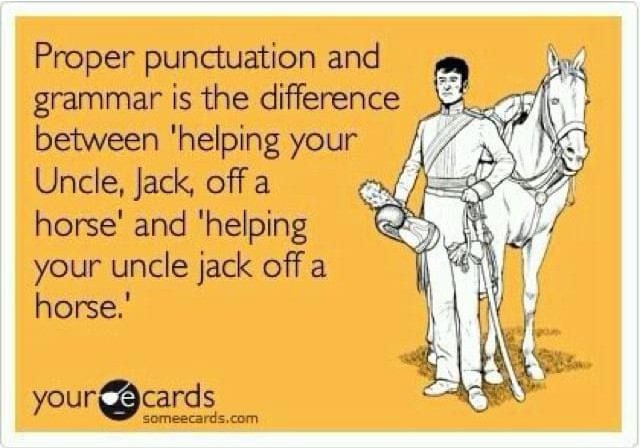
The art of writing is tragically undervalued these days. I grew up during the proliferation of cell phones and Internet access, of text messages and of Twitter with its fucking 140 character limit. I grew up and watched as basic writing skills evaporated, replaced by heavy reliance on acronyms, abbreviations, and emoticons. People, like me, who gave a shit about proper writing were mocked as “Grammar Nazis”, despite there being no shortage of humorous memes proving how grammatical errors can lead to wildly different interpretations of the same text. Now we live in a world plagued with misunderstandings and mistakes because people don’t know how to communicate properly. For the sake of being understood and for the sake of being taken seriously – learn proper writing.

I would also suggest finding writers that you like and studying carefully how they use language in the artistic sense. Two of my favorites are Aaron Sorkin and John Logan. In fact, Aaron has a wonderful description of language that comes in the form of a quote from The West Wing episode “War Crimes” (2001): “Words, when spoken out loud for the sake of performance, are music. They have rhythm, and pitch, and timbre, and volume. These are the properties of music, and music has the ability to find us and move us, and lift us up in ways that literal meanings can’t.” Even if you’re not writing music or poetry, I have found it very important to listen to the music of written words, as those properties can be just as powerful as the words themselves.

Be fussy in your word choices, too. The English language is robust and filled with synonyms. But that doesn’t mean that words are interchangeable. Two words that mean roughly the same thing in the dictionary can carry very different connotation and weight and subtext depending on the context. Words are tools. Use the wrong tool, and maybe you can brute-force your way to understanding, but you’ll have a much easier time communicating your ideas if you use the right tools.

Of the subject of storytelling, I am much more opinionated.

While modern society might not place much economic value on culture and the arts, it is helpful to understand the important role that storytelling serves in our society. From an anthropological perspective, storytelling is how we communicate complex ideas, such as values, empathy, morality, life lessons, and how to cope with dilemmas. Not only do we use stories to share these ideas geographically and across cultures, but also from generation to generation through time.

Where so many aspiring writers go wrong at the most basic and elementary level is that they confuse story with plot and they confuse character with characterization. Plot is the sequence of events that occur within a story. A story communicates the human experiences that are revealed through events – the ideas, choices, values, changes, and life lessons that give the events meaning. Characterization consists of physical attributes and other surface-level observations of an individual in a story. Character defines the individual more deeply – through their values, priorities, passions, their ambitions, their fears – and those other qualities that determine how he behaves under pressure.

Stories with no meaning and empty characters are… garbage. Sorry – there was no nice way to put it. They are forgettable because they lack substance.

I’ve read a lot of bad stories and watched a lot of bad films in my life. And 90% of the time, what makes them bad –- you can tell — someone involved in the production had a great idea for something really cool they wanted to show off. Maybe it was an idea for a cool space battle. Maybe it was an idea for a creepy monster design. Maybe it was an idea for an exciting action and combat sequence. Maybe it was a string of really funny jokes. And what they did was develop a flimsy plot as the vehicle to deliver this cool thing they wanted to show off. And don’t get me wrong… this cool idea – might well be very impressive and entertaining. But at the end of the day, there was no strong story behind the cool idea, and the production was utterly forgettable.

I’ll give you some examples. While I was in charge of the community theatre, we had a director drop out at the last minute and we had to scramble to put together another production. Because we had limited time, we chose a play called “Cloak and Dagger”, written by Craig Sodaro, which was supposed to be a spoof of “Casablanca” – a cinematic classic that tells a very compelling story. In our haste, we hung our hat on that connection in the hopes that we were performing a decent story. After a couple of read-throughs, it was obvious that the script was hot garbage. It was very obvious from the writing that the author had the idea for some jokes and gimmicks, and he wrote the play around those jokes. But there was no substance there. We realized that too late and had to make the best out of the situation.

Not long after, I was toying with an idea to write a stage play – a highly meta story – in which the characters were actors rehearsing for a play (a play within a play) on a stage that was haunted. And the idea was to take all of the over-used tropes of the horror genre and turn them on their head. It was the very definition of “all gimmick, no substance”. And it sucked because of it. I tried to shoehorn a meaningful story into the plot in an effort to salvage the idea. But it was a poor fit. Ultimately, I abandoned that project (the gimmick, anyway). But that meaningful story I tried to shoehorn in? I kinda liked it. I kept it, played around with it a little bit, and before I realized it, I had the basic structure of the story that would would go on to become “Socks”.

Stories – good stories – are about relatable characters and how they grow and change over time. They’re about the decisions those characters make, the obstacles they overcome, the dilemmas they face. And when I say all of that, I know it sounds like I’m describing a serious and dour story, something you’d find in the drama section of your local bookstore or video rental store. But that’s not true at all. Stories of all genres – including horror, sci-fi, and even comedy can incorporate meaningful stories into them.

I use food as an analogy to explain the concept. Your story – your substantive, meaningful story – is like the meat and potatoes of your meal. Genre is how you decorate the story and make it entertaining – genre is like gravy. Or if you prefer a healthier metaphor, a good story is like a nutritious salad, and genre is the dressing we pour over the salad to make it more palatable. And to extend the food metaphor – the cool idea with no meaningful story – is marshmallow fluff, tasty for a moment, but of no substance or nutritional value.

A story with substance is something that is more likely to stick with the audience. Human beings relate to the characters in stories and can use the lessons learned in those stories to navigate the struggles of their own lives. Again – I use the terms “lessons” and “struggles” which makes a meaningful story sound serious. But even slapstick comedy – done well – has a meaningful story hidden deep beneath that sugary frosting.

Again – I’m not an expert on the art of storytelling. If you want to get better at the craft, I strongly encourage you to study Robert McKee. I’ve found his writings and teachings on the subject to be very insightful and helpful.

Production Update #13

26 July 2026

It is with enormous pride and relief that I am able to announce this morning that the final draft of the film script is COMPLETED.

It has been a very long journey. My intention to write this story began approximately 9 years ago in the midst of my post-retirement road trip. For years, I tried to make it a nonfiction account of my experiences and my values, but I was never satisfied with what I wrote. Then, approximately four years ago, a bizarre bit of happenstance inspired a fictional version of the story that I could adapt for the stage.

While it didn’t take too long to produce a first draft, there were significant obstacles, delays, and interruptions that stalled the revision and editing process. And when I had the time to sit down and work on the draft, the challenges were formidable. Transforming a random collection of philosophical beliefs into a coherent and structured argument. Choosing every word deliberately to make the most convincing argument while allowing the characters to remain authentic and natural.

None of it came easy.

The final draft sits at 75 pages and 18,968 words.

The next step – I regret to inform you – is NOT advancing to production. The next step will be to re-write the film script as a novel so that can be published first.

I am cautiously optimistic that I can accomplish this in just a couple months’ worth of weekends. The story is already written. Now I just have to add the descriptive filler that comes with a novel. That shouldn’t take long. I hope to have the novel published by the end of the year.

Production Update #12

9 June 2026

This will be my final “non-update” update. I swear!

I’ve had this film project on the back burner for well over a year and made very little progress on it during this period of time. There are several reasons for this extended hiatus – including dread over how the story would be perceived in the current political climate, my struggles to raise money and expand my network, and debating the best way to go about producing the film.

But another reason why the film has been stalled so long is because I’ve always had a queue of other projects to work on. “Socks” has always been my most important project, but it’s also been the biggest project. I always wanted to get the other smaller projects done and out of the way before proceeding on to “Socks”. Problem was – all my life, I’ve had this bad habit of coming up with new ideas for projects faster than I could complete older projects. So my queue was ever-present and always growing.

Until a few months ago, that is. I finally snapped that habit. I’ve been able to stop inventing new projects to work on, and I’ve been plowing through my older projects to finally get them done once and for all. Accomplishing this has been the first phase of a six phase plan to get me = ultimately – to retirement. Phase II is going to be finishing both the film script for “Socks” and the novel version, which I hope to have done by the end of the year. Phase III will be producing the film, which I hope to have done by the end of 2027.

As for the production… I suck at fundraising, and given current economic conditions, I think it would be unwise for me to spend my life savings to do a proper film shoot. So the film will be an animated slideshow, and I’ll hire a handful of people to voice the characters.

So… this “update” is to announce that I am done with Phase I. I have cleared my project queue and have no further distractions to impede this film project. No more excuses. No more delays. “Socks” now has my undivided attention.

Production Update #11

20 April 2026

Relatively quick update today.

I have made no direct progress on finishing the script since my last update. I know that sounds really bad, but all is not as bad as it seems.

I wanted to clear some other creative projects off my plate, first, so that I could give my undivided attention to this film project. The danger in that approach is that I might find other projects to distract me, indefinitely postponing progress on the film. And for most of my life, that’s how it’s been. I keep coming up with new ideas for creative projects faster than I can complete them, resulting in a never-ending, always growing queue of projects.

To my credit – for the first time in my life – I’ve stopped adding to that queue. There are two major projects that I am working on presently – they are the last two I wanted to get done before I focused my attention on “Socks”, and there’s light at the end of the tunnel. I can confidently say that both projects will be finished before the end of June. At which point, there should be nothing left to distract me from working on the film.

Here is the game plan…

Phase I

  1. Finalize the film script.
  2. Adapt the film script into a novel.
  3. Publish the novel to Amazon KDP.

Estimated Completion: end of year, 2026

Phase II

  1. Generate AI Images
  2. Record Narration Audio
  3. Assemble and Edit Videos
  4. Release to YouTube (will be an episodic release)

I don’t imagine this will take all that long, but I’m giving myself until the end of 2027 in case there are unforeseen complications. July 2027 is the 10 year anniversary of my road trip where I first met my hitchhiker friends, so there would be something poetic about having the story uploaded by then.

Production Update #10

18 January 2026

It has been nearly eight months since my last production update. I apologize for the lack of updates during this time period. Progress on this film project stalled due to three main factors. Let me catch you up.

First. Just a few weeks after my last production update, I suffered a minor medical issue. I say minor now, but at the time it was pretty traumatic. Worse still, I had been gambling for years on not needing health insurance, and my luck finally ran out. The medical bills were a huge setback, and almost all aspects of my life came to a screeching halt as I tried to focus on my health and recovery, as well as my financial recovery.

Second. What I described in my last production blog hasn’t gotten any better. In fact, I’d argue the political climate is worse now than it was a year ago. I fear the general public lacks the minimum necessary empathy and compassion for the story of “Socks” to resonate. I fear that the message of the film will fall on deaf ears.

Third. Despite this being a microbudget film, the bar to entry on this film project is still too high for me. To do this film right, I would have needed to raise at least $67,000. That price tag doesn’t count (1) hiring more experienced crew members in key positions, such as a cinematographer / DP and a sound mixer on set, and a colorist and sound designer in post, (2) publicity costs, and (3) distribution costs.

I managed to save up a little over $40,000 for the film, but the bulk of that came from my own savings and the sale of my house last year. At $40,000, I would have had to ask the cast and crew to work for free or – at best – hope for residual income from distribution of the film. I loathe asking people to work for free.

In another reality, I might have been happy to sink my life savings into this project. But given the current political and economic environments, it would be unwise for me to do so. Setting aside my own life savings, I have managed to raise a whopping $70.

I suck at fundraising. It has always been my Achilles’ heel. I hate asking for money. I hate asking for favors. It’s just baked into my psyche. Even if I could somehow overcome this problem and raise the money needed to fund this film, it was always going to represent a significant delay in forward progress on this project. Similarly, trying to network and assemble a crew – given the significant commitments necessary – was also going to be a challenge without money to pay them with. My friends who would probably volunteer their time have their own responsibilities and commitments.

So what does this mean for the future of this film project?

I assure you that I am not giving up. This project is too important to me.

But I need to lower the bar to entry on this film project. I need to reduce or eliminate this project’s dependence on my ability to raise money or assemble a crew. If I don’t, this film project will continue to stall in Development Hell. The longer it takes for me to produce the film, the more likely it is that I’ll get hit by a bus before this story sees the light of day. And even if I don’t get hit by a bus… there are other things I want to accomplish in my life. As important as this project is to me, I don’t want it hanging around my neck for the rest of my life.

So… in the interest of forward momentum, I’m going to make some compromises. Painful compromises.

Rather than produce a live-action, feature-length film, using real actors, real locations, real sets, real costumes, and real props… I’m going to animate the film using… Open AI.

(Excuse me while I throw up in my mouth a little.)

It turns my stomach to use AI in a creative project, and I never thought I would ever resort to doing this. But it’s a low-cost way to produce the images of this film. Not only does it save tens of thousands of dollars of pre-production, production, and post-production costs, but I don’t have to negotiate access to filming locations, I don’t have to coordinate the schedules of a dozen members of a cast and crew that I can barely afford to pay, I can avoid some of the very real hazards of filming in the desert and filming a dangerous knife fight, and so much more.

I still hope to hire voice actors to read the script. But the commitment in both time and resources will be considerably less. And then I’ll distribute the film on YouTube. Going this route, I should be able to complete the film with just a fraction of the money I already have saved.

I will also be converting the script into a novel and self-publishing that to Amazon. That was always part of the plan. But people don’t read as much as they used to, and I’d rather not have the legacy of “Socks” be dependent on a shrinking literate population.

By the way, none of this precludes the possibility of “Socks” being turned into a proper film someday. In fact, producing it in this animated form and getting it out there in front of the eyes of potential investors and producers might be what gets the influx of funding and personnel that the film project needed. And if it doesn’t? Well, then, the story is still out there – and that’s what’s important.

With all of that in mind, I have overhauled this website and relocated it from https://leathertrampproductions.wordpress.com/ to https://socksfilm.wordpress.com/. The YouTube channel has also been rebranded, and a new Facebook page has been setup.

Next steps… I’m working on a third (and hopefully final) version of the script. The first draft was done in July 2024 and the second draft was done in April 2025. So my goal is to have the third draft done by no later than June 2026.

Production Update #9

28 May 2025

I’m having what you might call a crisis of confidence.

“Socks” is not an overtly political story. However, its message unavoidably touches on both economic and social policies.

I feel that we have a very solid story and script. I’m proud of what has been developed. But of late, I’ve been concerned that the story cannot rise to meet the occasion that is our current political climate.

The story assumes that the audience has a basic capacity for compassion and empathy, even if we differ in how we apply it… It assumes a shared sense of justice, even if we interpret it differently.

Over the past several months, it has been evident that a segment of our population takes perverse pleasure in outright cruelty and a much larger segment is indifferent toward casual cruelty. Fundamental American principles such as due process, separation of powers, and checks and balances have been tossed to the side because they represent an inconvenient obstacle toward political goals. Corruption is not just tolerated – it’s celebrated.

Certainly not all Americans feel this way. I don’t even think that a majority of Americans feel this way. But the number of Americans who do feel this way is disturbingly high, and this minority has been granted power by the indifference and ignorance of many more Americans.

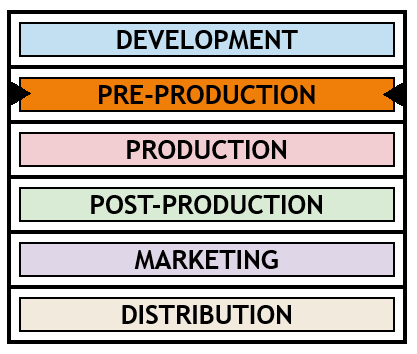
I always knew that “Socks” would be somewhat controversial. But now – as we near the end of the Development phase and inch closer and closer toward Pre-Production, I am forced to wonder if our nation doesn’t need to have a reckoning first before a story such as this can resonate with a general audience.

Production Update #8

27 April 2025

At long last… the second draft of the script is completed. The script now stands at 18,912 words and 76 pages. I’ll have to do some time tests some other day, but it’s safe to say this will be a feature-length film.

For the most part, the second draft is the final draft – locked in. There’s an 1100 word section in Scene 10 that I don’t absolutely love yet. I need to revisit it later with fresh eyes to see if I can’t polish it up a bit further.

I’m kind of embarrassed that it took me about 9 months from the conclusion of the first draft to the conclusion of the second draft. But there have been a number of unique challenges with this script.

Writing a stage adaptation to Mary Shelley’s “Frankenstein” was so much easier because the source material was already there. I simply had to translate it. In contrast, “Socks” is an original story of my own.

In “Frankenstein”, I kept the 19th century dialect. While some people might consider that a challenge, it actually made my job easier because old English is more formal, a lot like writing political rhetoric – a style of writing I’m particularly good at. With “Socks”, I had to write casual dialogue, peppered with small talk and minor distractions to make it sound more natural. I’m not particularly good at small talk in real life. I prefer to get straight to the point. So teasing out the script in this manner was especially challenging for me.

“Socks” is a persuasive story. The challenge in writing a persuasive story is to avoid beating the audience over the head with your message, but rather to make it subtle. If your audience accepts your argument, you want them to think that they reached that conclusion on their own rather than being dragged there kicking and screaming.

Finally, I’m not a professional writer. I’ve studied Robert McKee. I know good writing when I see it and I know bad writing when I see it. I know the difference between plot and story, the difference between character and characterization. I know the importance of strong character development and the importance of conflict. I have no delusions that I’m producing a work of Shakespeare, but I’m making every effort to ensure that this script – this story – is as strong and as professionally written as I am capable of. That meant not being content with “good enough” but constantly going back over the script again and again to polish it and bang out as many imperfections as I could find. That was a very time-consuming process.

And there’s a lot of me in this script. A lot of my own story is laid open bare in this script, and so now I move on to the next step – allowing a select group of friends to read the script and give me feedback.